
The expensive home office and the good home office are not the same thing. Most of what makes a workspace comfortable and pleasant costs little or nothing — it's about sequencing and second-hand shopping, not a big spend. Here's how to build one that punches well above its price.
Where to spend
Put your limited money where your body meets the setup. In order:
- The chair, first and always. It's the one object touching you for eight hours. A good second-hand ergonomic chair — the used-office-furniture market is full of them at a fraction of retail — beats a new cheap one every time.
- Screen height. Not a new monitor — just getting your existing screen to eye level. A laptop stand (or a sturdy stack of books) plus a cheap external keyboard is the highest-value few pounds you'll spend.
- One warm lamp, if your room is dark after sunset. A single good light does more for comfort and video calls than any decor.
Spend on the thing that touches you. Save on everything else.
Where to save
Almost everything else can be cheap, borrowed or second-hand without you noticing the difference:
- The desk. Depth matters far more than price. Aim for around 60–70 cm deep and buy it used or flat-pack. A plain top on decent legs is all you need.
- Storage. A single second-hand drawer unit or a shelf you already own handles the clutter. Skip the matching furniture set.
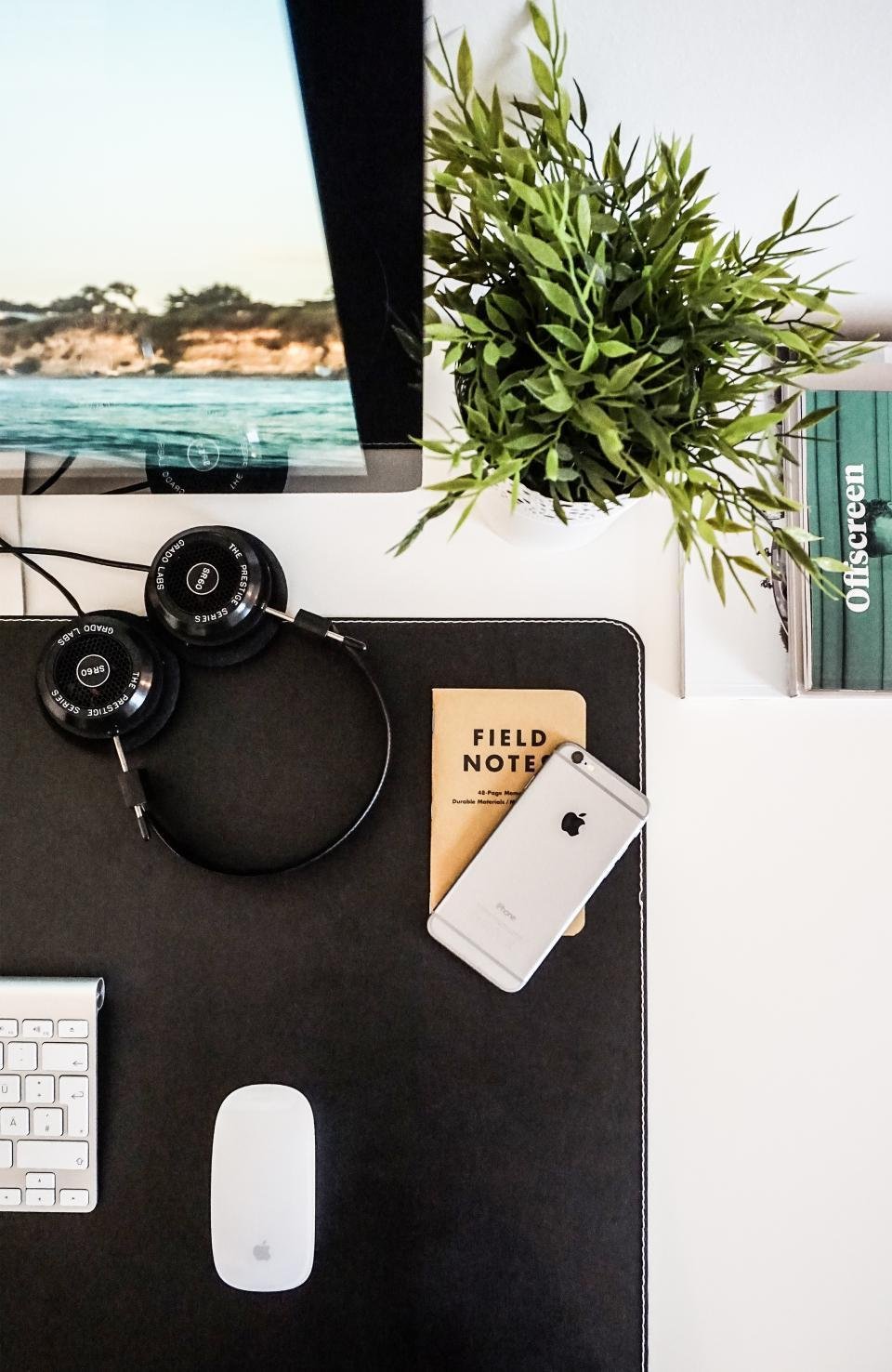
- Accessories. A felt mat, a mug of pens, a notebook. None of it needs to be designer to look intentional.
Second-hand is the budget superpower here. A solid teak desk or a real ergonomic chair from the used market often costs less than a flimsy new one — and lasts far longer. Check local marketplace listings and office clearances first.
The free upgrades
Some of the best moves cost nothing at all:
- Reposition for daylight. Turning your desk side-on to a window is free and beats any lamp. See our lighting guide for placement.
- Tidy the cables. Routing leads down one leg costs a few velcro ties and transforms how the space reads.
- Clear the surface. Restraint is free and instantly makes a cheap desk look considered.
- Add a cutting from a plant. A pothos cutting in a glass of water is a zero-cost bit of life on the desk.
A starter plan by budget
Rough, real-world targets to aim at:
- Near-zero: existing table side-on to a window, laptop on books, borrowed chair with a cushion for lumbar support, cables tidied, one plant cutting.
- Modest: add a second-hand ergonomic chair and a cheap laptop stand plus external keyboard — the two upgrades you'll feel most.
- Considered: a used solid-wood desk, a warm lamp, a felt mat, and an under-desk tray for cables. A workspace that looks and feels far dearer than it was.
Build it in that order and a tight budget stops being a limitation. The most considered-looking home offices are rarely the most expensive — they're the ones where someone spent carefully on the chair, used daylight for free, and had the restraint to stop there. For the full method, see how to design a home office you actually want to sit in.
Frequently asked questions
What should I spend money on first for a home office?
The chair. It touches you for hours every day, and a good second-hand ergonomic chair does more for comfort and health than anything else you can buy. Save on the desk and accessories.
How can I set up a home office cheaply?
Buy the chair and desk second-hand, raise your laptop on books with a cheap external keyboard, use daylight instead of buying lamps, and add one plant. You can build a comfortable workspace for very little.
Do I need an expensive desk?
No. Depth matters more than price — aim for about 60 to 70 cm deep. A solid second-hand or flat-pack top on good legs works perfectly.