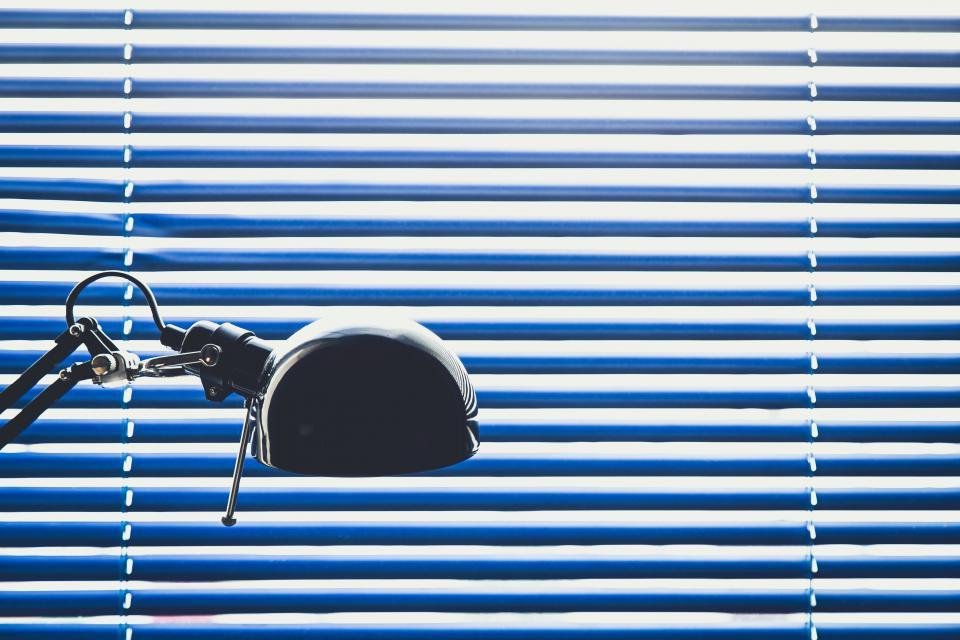
Lighting is the most overlooked decision in a home office and the one you feel most — in your eyes by mid-afternoon and on your face during every video call. The fix is rarely more light. It's better-placed, better-layered light.
Start with the window
Daylight is the best and cheapest desk light you'll ever have, but placement decides whether it helps or hurts. Put the desk side-on to the window. Facing it means squinting into glare and a washed-out screen; backing onto it turns your monitor into a mirror and your face into a shadow on calls. Side-on gives you soft, even light across the surface with none of the drawbacks.
Sit at your desk mid-morning and look at a dark section of your screen. If you can see the window reflected in it, rotate the desk or add a light-filtering blind before you buy a single bulb.
Layer three kinds of light
A good room never relies on one source. Aim for three layers:
- Ambient — a soft overall fill so the room isn't a bright screen in a dark cave (which strains your eyes badly).
- Task — a directional desk lamp lighting your hands, notes and keyboard, positioned to the side opposite your writing hand so it doesn't cast a shadow.
- Accent — a low lamp or wall wash in the evening that keeps the space warm and calm once the daylight's gone.
Get the colour temperature right
Colour temperature, measured in kelvin (K), changes how a room feels and how you work:
- 2700–3000K (warm white) — evenings, ambient and accent light. Relaxing, and kinder on camera.
- 3500–4000K (neutral white) — the sweet spot for daytime task lighting and focus.
- 5000K+ (cool daylight) — sharp and alert, but harsh for long stretches and cold on video.
A single desk lamp with adjustable temperature lets you run cool and focused by day, warm and easy by night — the closest thing to a one-object lighting upgrade.
How much light do you actually need?
Bulbs are sold in lumens (brightness), not watts — watts only ever measured energy use, which is why old habits mislead with LEDs. As a rough guide for a home office:
- Ambient room light: around 1,500–3,000 lumens total for a typical small room, spread across more than one source rather than a single ceiling fitting.
- Task light at the desk: a lamp of roughly 400–800 lumens is plenty when it's close to the work surface. Distance matters enormously — light falls off sharply, so a modest lamp 40 cm away beats a bright one across the room.
Two moderate sources almost always beat one bright one. A single powerful ceiling light creates hard shadows and glare; the same total output split between a lamp and a wall wash reads softer and is far more comfortable to work under.
Pointing a lamp at a pale wall or ceiling instead of directly at your desk turns a small hard source into a big soft one. It's the cheapest way to get flattering, glare-free light — and it's exactly what photographers do.
Choosing bulbs: CRI, flicker and dimming
Three specs on the box actually matter, and one doesn't:
- CRI (Colour Rendering Index). How faithfully a light shows colour, scored out of 100. Cheap LEDs sit around 70–80 and make skin and wood look flat or slightly grey. Look for CRI 90+ — it costs a little more and makes a genuinely visible difference, especially if you do any visual work or appear on camera.
- Dimmability. The single most useful feature, because the right brightness at 9am is wrong at 9pm. Check both the bulb and the fitting support it.
- Flicker. Very cheap LED drivers can flicker in a way you don't consciously see but which contributes to headaches and eye fatigue. Reputable brands are worth it here.
- Watts — mostly ignore. With LEDs, wattage only tells you running cost. Buy on lumens and colour temperature.
Where to put the desk lamp
Position matters as much as the lamp itself:
- Opposite your writing hand. Right-handed? Put the lamp to your left, so your hand doesn't cast a shadow over what you're writing.
- Beside the screen, never behind it. A light behind the monitor shines toward your eyes and forces your pupils to fight the contrast.
- Above the line of sight. The head of the lamp should sit higher than your eye level so you never look straight into the bulb.
- Add a bias light. A soft lamp behind the monitor washing the wall reduces the harsh jump between bright screen and dark surroundings — one of the simplest fixes for evening eye strain.
Light the face, not the ceiling, for a better call.
Fix the after-dark video call
Overhead light after sunset is the villain of every evening meeting: it drops shadows under your eyes and drains your colour. The fix is one warm, soft light slightly above eye level and roughly in front of you — a lamp bounced off a nearby wall, or daylight from the window you're now facing. Kill the overhead, light the face, and you'll look rested even when you aren't. There's more on framing and background in our video call guide.
Layer the light, place the desk side-on, buy one dimmable CRI-90 lamp and point it at a wall. That's ninety percent of home office lighting solved — no rewiring, no ring light, just the right light in the right place.
Frequently asked questions
What is the best lighting for a home office?
Daylight from the side, plus layered artificial light: a soft ambient source so the room isn't dark around a bright screen, a directional desk lamp for the work surface, and a warm accent light for the evening. Avoid relying on a single overhead fitting.
What colour temperature is best for working?
Around 3500–4000K (neutral white) suits daytime focus work. Use warmer 2700–3000K light in the evening, which is more relaxing and kinder on camera. Very cool 5000K+ light is alert but harsh over long stretches.
How many lumens do I need for a desk?
A desk lamp of roughly 400–800 lumens is usually plenty when positioned close to the work surface, with around 1,500–3,000 lumens of ambient light for a typical small room. Splitting light across two or more sources works far better than one very bright fitting.
Should a desk lamp be on the left or right?
On the opposite side to your writing hand, so your hand doesn't cast a shadow on the page — left side for right-handed people. Keep the lamp head above eye level and never place a light directly behind your monitor.