
Every good desk has one living thing on it. Plants are the cheapest, fastest way to make a workspace feel calmer, and there's real research behind the instinct: biophilic design — bringing nature indoors — is linked to lower stress and better mood at work. The catch is that most desks sit well back from a window. So the whole game is choosing plants that don't mind.
The seven most forgiving desk plants
Every plant below tolerates low or indirect light and infrequent watering — the two things that kill office plants first.
- Snake plant (Sansevieria). The undisputed champion of neglect. Handles low light, dry air and a missed month. Its upright leaves suit a narrow desk edge.
- ZZ plant (Zamioculcas). Glossy, architectural, near-indestructible. Thrives in exactly the dim corners other plants sulk in.
- Pothos. A trailing vine that grows in almost anything and tells you clearly when it's thirsty by drooping, then perks back up within hours of watering.
- Cast iron plant (Aspidistra). Named for a reason. Deep green, tolerant of shade and cold, happy to be ignored.
- Spider plant. Fast, cheerful and forgiving; produces baby plants you can pot up and give away.
- Chinese evergreen (Aglaonema). Patterned leaves add colour without needing a bright window.
- Succulents — with a caveat. Lovely on a desk, but they genuinely need bright light. Only pick one if your desk is near a window; otherwise it will slowly stretch and fade.
Overwatering kills more desk plants than drought. Water only when the top 2–3 cm of soil is dry, and always use a pot that drains. When in doubt, wait a few more days.
Where to put it
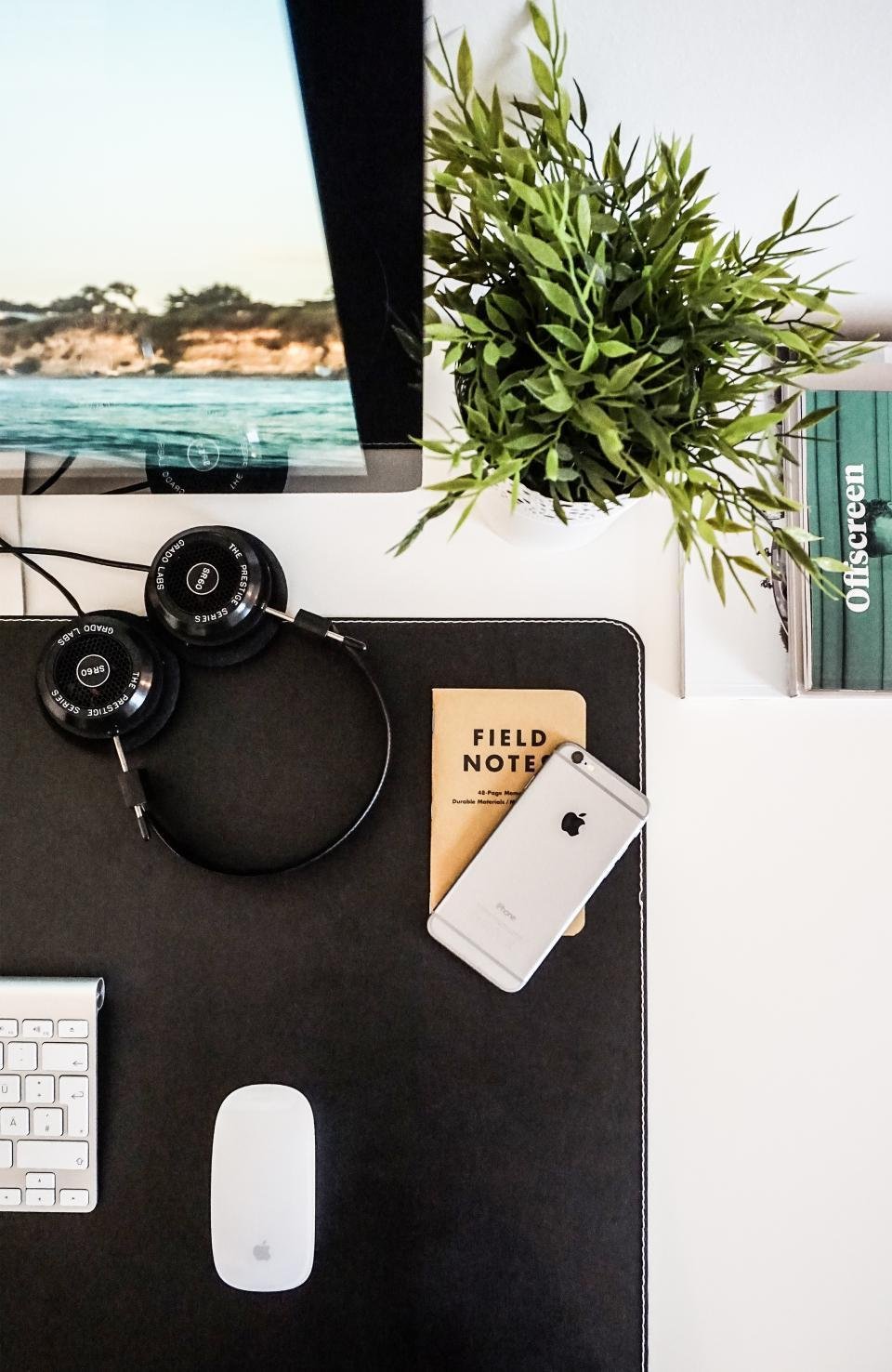
Position matters as much as the plant. Keep greenery in your peripheral vision rather than between you and the screen — the corner of the desk, a shelf beside the monitor, or a hanging pot just off to one side. You want to catch it when you look up from work, not have it fighting your sightline.
Small moves that keep it alive
- Rotate a quarter-turn weekly so it grows evenly instead of leaning toward the light.
- Dust the leaves monthly — a plant in a dim room needs every photon it can get, and dust blocks them.
- Group two or three if you have the space; plants raise humidity for each other and read as intentional styling.
- Skip fertiliser in winter, when low-light plants are barely growing anyway.
Start with one snake plant or pothos. If it survives a month — and it will — add a second. It's the smallest possible upgrade to a workspace and, calorie for calorie of effort, the one you'll notice most every single day.
Frequently asked questions
What is the best desk plant for a room with no natural light?
A snake plant (Sansevieria) or a ZZ plant. Both tolerate low light and irregular watering better than almost anything else, making them ideal for a desk far from a window.
How often should I water a desk plant?
For most low-light desk plants, water only when the top few centimetres of soil are dry — often every 1 to 3 weeks. Overwatering kills more office plants than neglect does.
Do desk plants actually improve focus?
Studies on biophilic design link visible greenery to lower stress and modest gains in attention and mood. One well-placed plant won't transform productivity, but it reliably makes a workspace more pleasant to sit in.