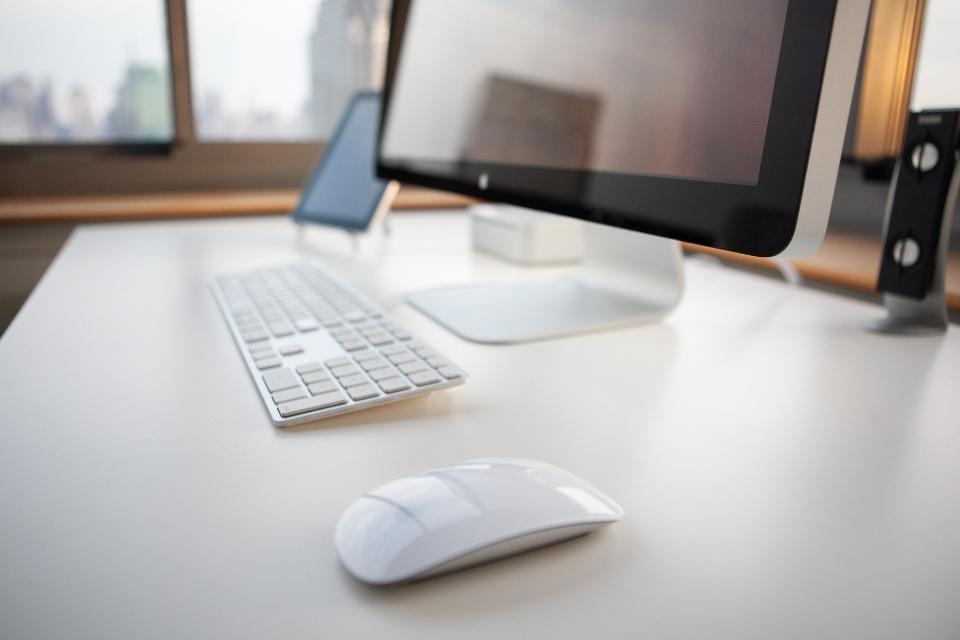
A small home office is a design brief, not a compromise. Constraints force the good decisions bigger rooms let you dodge — every object has to earn its place. Here are twelve ideas that consistently make a tiny workspace feel deliberate.
Find the space you already have
- Claim a corner, not a wall. An L-shaped corner gives you two surfaces of visual support and hides the desk's back, so cables never show.
- Work off a landing or hallway nook. A 90 cm-wide shelf at desk height turns dead circulation space into a full workstation.
- Use the end of a bookshelf. A pull-out or fold-down leaf off an existing unit borrows storage you already own.
- Go vertical. When floor space runs out, build upward — a single shelf above the monitor holds everything a drawer would.
The smallest genuinely comfortable desk is about 100 cm wide × 60 cm deep. Below that, a laptop works but an external monitor starts to crowd you.
The measurements that decide everything
In a tight space, a tape measure saves more money than any clever product. The numbers worth knowing before you buy anything:
- Desk depth: 60 cm minimum, 70–80 cm if you use an external monitor. Depth is the one dimension you can't compromise on, because it sets how far your screen sits from your eyes. Width is far more flexible.
- Desk width: 100 cm is comfortable, 80 cm workable for a laptop-only setup. Below that you're fighting for elbow room.
- Knee clearance: at least 60 cm wide and 60–65 cm high under the desk, clear of drawers and cross-bars. This is the measurement flat-pack desks most often get wrong.
- Chair pull-out: allow about 75–90 cm behind the desk edge so you can actually get in and out.
- Walkway behind: 60 cm if anyone needs to pass while you're seated.
Chalk or tape the footprint on the floor before you buy. Five minutes with masking tape has saved a lot of people a return delivery.
Make a small desk work harder
- Float the desk on the wall. A wall-mounted top with no legs frees the floor beneath and makes the whole setup read lighter.
- Raise the monitor, reclaim the desk. A riser (or a stack of nice books) lifts the screen to eye level and frees the space underneath for a keyboard and a notebook.
- Choose a chair that tucks fully under. In a shared room, a chair that disappears beneath the desk gives you the floor back the moment work ends.
- Add one drawer, not a cabinet. A single shallow drawer for cables and chargers keeps the surface clear without eating the room.
Make it feel bigger than it is
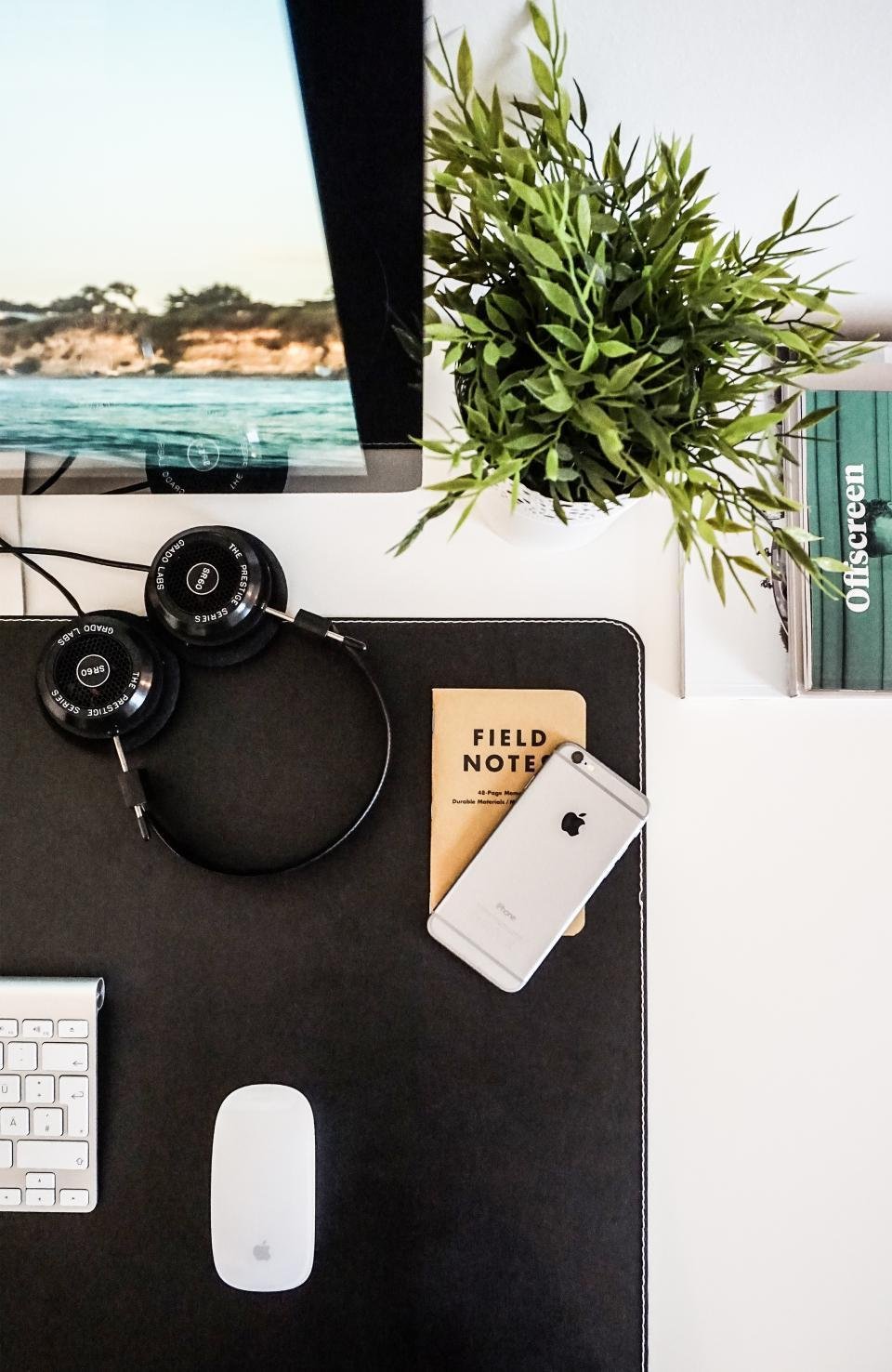
- Keep the palette to two tones. One warm neutral plus one accent stops a small space from feeling busy.
- Let daylight hit the desk side-on. Even a tiny setup feels open when it borrows a window rather than facing a wall.
- Add one plant, not five. A single green thing softens a compact desk; a jungle just shrinks it.
- Hide the tech, show one object. Route cables out of sight and leave exactly one personal piece on display. Restraint reads as space.
Small-space mistakes to avoid
- Buying a desk that's too shallow. A 45 cm-deep console looks perfect against the wall and puts your monitor about 20 cm from your face. Depth first, always.
- Filling the walls with open shelving. Visible clutter shrinks a room faster than furniture does. Closed storage reads calmer — see our storage guide.
- Pushing the desk against a window. Facing the glass means glare all morning; side-on gives you the daylight without the squint, as in our lighting guide.
- Using a dining chair permanently. Fine for a week, punishing for a year. A tuck-under task chair costs little and saves your back.
- Forgetting the cables. In a small room the mess is always in shot. Route them once with our cable method.
None of these need a renovation or a big budget. A small home office done well isn't a scaled-down version of a big one — it's a sharper edit of the same idea: the few right things, in the right place, with the light on your side.
Frequently asked questions
What is the minimum size for a home office desk?
About 100 cm wide by 60 cm deep is the smallest genuinely comfortable desk, and you want 70–80 cm of depth if you use an external monitor. You also need roughly 60 cm of clear knee space underneath and 75–90 cm behind the desk to pull the chair out.
How do I fit a desk in a tiny room?
Claim a corner or an alcove rather than a whole wall, float the desktop on the wall so the floor stays clear, build upward with a shelf instead of outward with drawers, and choose a chair that tucks fully under. Tape the footprint on the floor before buying anything.
How can I make a small home office feel bigger?
Hold the palette to one warm neutral plus a single accent, borrow daylight by placing the desk side-on to a window, keep the surface almost clear, and choose furniture that shows some floor beneath it. Restraint reads as space; clutter reads as a smaller room.