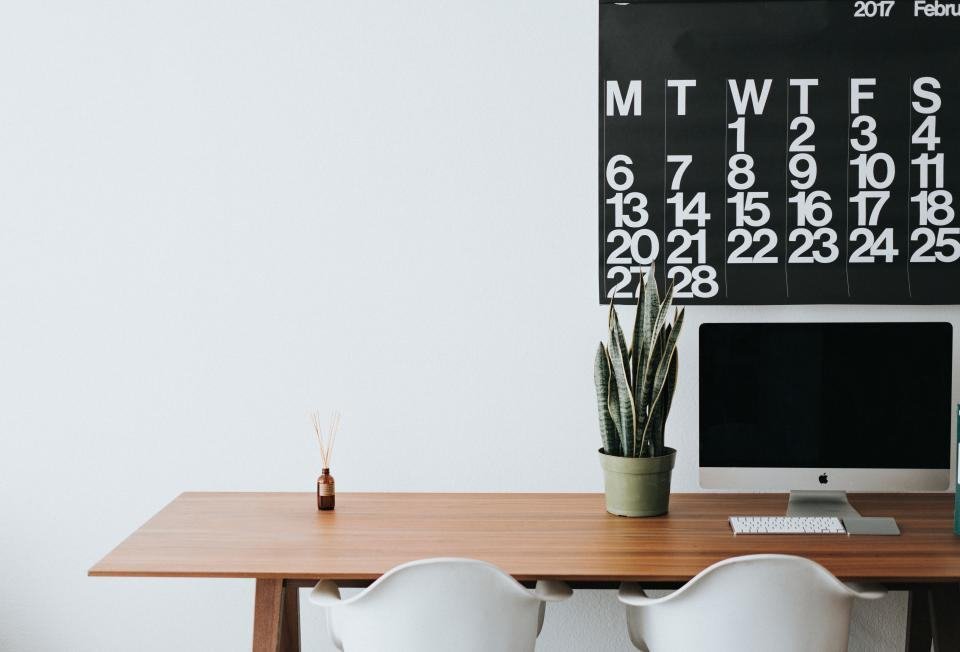
Most desks aren't messy because their owners are disorganised. They're messy because the things on them have nowhere else to go. Fix that and the tidiness looks after itself — which is the whole trick, since no one sustains a system that takes effort.
Why tidy desks get untidy
There's one rule underneath all of this: an object ends up wherever putting it away is hardest. If your charger's home is a box in another room, it lives on the desk. If the drawer is jammed, the paperwork stays in a pile. So the goal isn't more discipline — it's making the right place the easiest place.
Give every category one home
Work through what's actually on and around your desk and sort it into categories, then assign each one a single location:
- Daily-use (laptop, notebook, pen, mug) — on the desk, and nothing else is allowed here.
- Weekly-use (chargers, headphones, notepads) — the top drawer or a tray within arm's reach.
- Occasional (spare cables, stationery stock, manuals) — a labelled box on a shelf or in a cupboard.
- Archive (old paperwork, warranties) — out of the room entirely if you can.
- Doesn't belong — the pile that migrated in from the rest of the house. Deal with this first; it's usually a third of the problem.
If you haven't touched something in a week, it doesn't belong on the surface. This is the same discipline behind a minimalist home office — subtraction, not storage shopping.
Closed vs open storage
This decision does more for how a room feels than any container you buy:
- Closed storage — drawers, cabinets, boxes with lids — for anything visually busy: paperwork, cables, chargers, supplies. Working materials are rarely beautiful.
- Open shelving — for the few things that genuinely look good: books, a plant, one or two objects.
The mistake is open shelving everywhere. It photographs beautifully in showrooms because it's styled with almost nothing on it; filled with real working life, it reads as clutter from across the room. In a shared space this matters even more — closed storage is what lets work disappear at the end of the day, exactly as we argue for a bedroom office.
Storage for small spaces
- Go vertical. When floor space runs out, build upward — one shelf above the desk holds what a whole drawer unit would.
- Use the space under the desk for a slim drawer unit on castors that rolls away.
- Hang things on the wall — a pegboard, hooks for headphones and bags, a wall pocket for current paperwork.
- Buy one taller unit rather than two short ones. Height is cheap; floor area isn't.
- Use the back of a door — an over-door organiser is dead space made useful.
More space-saving moves are in our small home office ideas.
The paper problem
Paper is the single biggest source of desk creep, because it arrives continuously and rarely gets a decision. A simple system beats a clever one:
- One inbox tray. Every piece of incoming paper lands here and nowhere else.
- Decide once, weekly. Empty the tray on a set day: act on it, file it, or bin it. Nothing goes back in.
- Keep the "file" category tiny. Most paperwork exists digitally already — scan with your phone and recycle the original where you safely can.
- Give current projects a wall pocket so live paperwork is visible but off the desk.
The five-minute reset
The system only survives if maintaining it is trivial. At the end of each working day: clear the surface back to daily-use items, put stray cables in their drawer, drop paper in the inbox tray, and switch off the lamp. That's it — and if it takes longer than five minutes, your storage is still in the wrong place, not your habits.
Pair it with cables routed once (our cable management guide) and you get the thing everyone actually wants: a desk that looks composed without being fussed over — and doubles as a clean shutdown ritual at the end of the day.
Frequently asked questions
How do I organise a small home office?
Give every category of item one home, keep only daily-use things on the desk, and go vertical — a shelf above the desk holds what a drawer would without using floor space. In a shared room, closed storage matters most so work disappears at the end of the day.
Should home office storage be open or closed?
Closed storage for anything visually busy — paperwork, cables, chargers, supplies — and open shelving for the few things that look good, like books or a plant. Open shelves photograph well but quickly read as clutter when filled with working materials.
How do I keep my desk tidy long term?
Make tidying take under five minutes by ensuring everything already has a home, then do a short reset at the end of each working day. Tidiness fails when putting things away is harder than leaving them out, so fix the storage first and the habit follows.