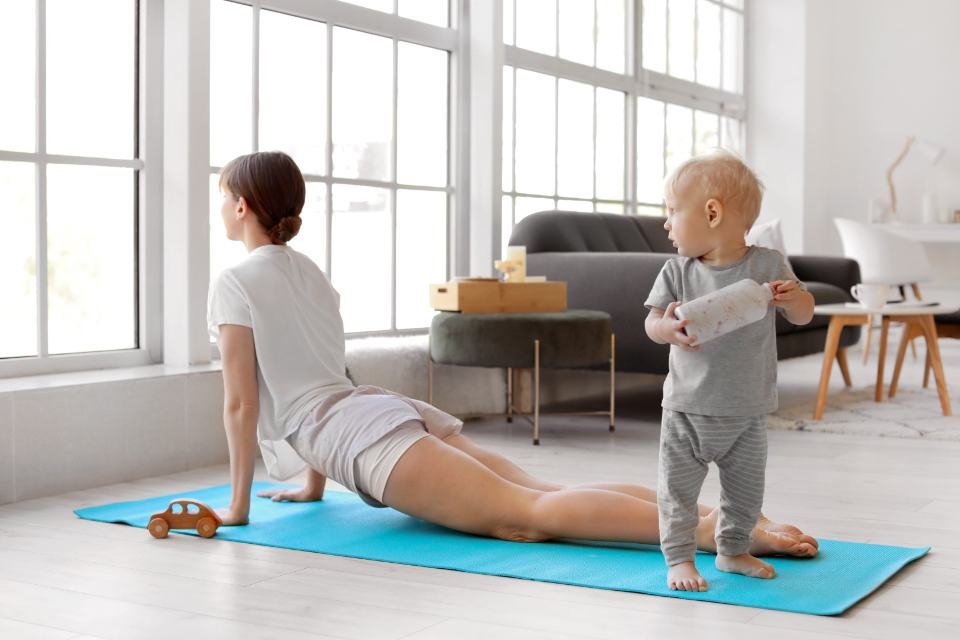
Sitting isn't uniquely evil — staying still is the problem. Hold any position for hours and some muscles shorten while others switch off. These stretches simply reverse the specific shapes a desk puts you in, and they take about two minutes. None of them need equipment.
A quick note before the list: stretching is not a substitute for a properly set up workstation. If your neck hurts, the first fix is usually getting your monitor to eye level, not more stretching. If you have persistent or severe pain, see a professional rather than an article.
Neck and shoulders
- Chin tuck. Sit tall, look straight ahead, and gently draw your chin straight back (think "double chin", not nodding down). Hold 5 seconds, repeat 5 times. This is the direct antidote to the forward head-poke a low screen causes.
- Neck side-bend. Drop your right ear toward your right shoulder, keeping the left shoulder down. Rest your right hand lightly on your head — no pulling. Hold 20–30 seconds each side.
- Shoulder rolls. Roll both shoulders backward in slow, big circles, 10 times. Simple, and it resets the shrug most people hold without noticing.
Stretch to mild tension and stop — never to pain. Breathe normally throughout; holding your breath tightens the very muscles you're trying to release.
Back and chest
- Doorway chest stretch. Stand in a doorway, forearms on the frame with elbows at roughly shoulder height, and step gently forward. Hold 20–30 seconds. Hours of typing round your shoulders forward; this opens them straight back up.
- Seated spinal twist. Sit tall, place your right hand on the outside of your left thigh, and rotate gently to the left, turning your head last. Hold 20 seconds each side.
Wrists and hands
- Wrist flexor and extensor stretch. Extend one arm straight out, palm down, and gently pull the fingers back with your other hand — hold 15–20 seconds. Then flip the palm up and repeat. Do both arms. If you type all day, this is the one people skip and regret.
Hips and legs
- Standing hip flexor stretch. Step one foot well forward into a short lunge, tuck your pelvis slightly under, and feel the front of the back hip open. Hold 20–30 seconds each side. Sitting keeps hip flexors short all day; this is the counterweight.
- Seated figure-four. Sit tall, rest your right ankle on your left knee, and lean gently forward with a flat back. Hold 20–30 seconds each side for the glutes and outer hip.
How to actually remember
Knowing the stretches isn't the hard part — remembering them at 3pm is. What works:
- Attach them to something you already do. Stretch while the kettle boils, at the end of every meeting, or between focus blocks in your daily routine.
- Pick two, not eight. A chin tuck and a doorway stretch done daily beat a perfect eight-stretch routine done twice.
- Make standing easy. If getting up is frictionless — clear floor, no cable tangle — you'll do it more, which is half the benefit of a sit-stand desk anyway.
- Set one recurring reminder, then obey it for a week until it's habit.
Two minutes, a few times a day, is genuinely enough to change how you feel at five o'clock. The stretches aren't the point so much as the interruption — you're reminding a body built to move that it's allowed to.
Frequently asked questions
How often should I stretch at my desk?
Little and often beats one long session. Aim for a short movement break roughly every 30 to 60 minutes — even one or two minutes of standing and stretching. Frequency matters more than duration, because the problem is staying still, not the posture itself.
What are the best stretches for desk workers?
The ones that open what sitting closes: a chin tuck and neck side-bend for the neck, a doorway chest stretch for rounded shoulders, a seated spinal twist for the back, wrist flexor and extensor stretches for typing, and a standing hip flexor stretch for the hips.
Do desk stretches actually help?
They help with the stiffness and discomfort that come from staying in one position, and they prompt the movement breaks that matter most. They're not a substitute for a properly set up desk and chair, or for medical advice if you have persistent pain.